
Definitive guide
Big Data and web design
Big Data In Web Design: Why It Matters For Your Business
Why does big data in web design matter for your business? This might have been a question medium to large-scale enterprises have encountered pre-pandemic.
Or it might be an area of interest new entrepreneurs are looking into as they venture to develop their company’s website after a few months of operation. Big data in web design, after all, is still something new.
So let me help answer that question through this blog post. Having been in web development for several years, I know how important big data is in web design. I’ll share here the basics of Big Data, its role in website design, and the challenges that come with it.
Since Big Data is amazing, I’ll also cite some cool companies that use it and some trends. Enjoy reading!
Big Data 101
This section is on the basics of Big Data. Basics like what it is and how it began. Plus, an overview of its types and the technologies used to handle and digest it for human use would be useful. Let’s begin!
1. What is Big Data?
Industry definitions of “Big Data” normally include the words “large volume of data” or “massive data” that may either be “unstructured” or “structured” and require “analytics” for “processing” into human digestible information.
However, this definition is vague because it does not identify its source and form. In layman’s terms, Bata Data is an accumulation of information produced by individuals—persons, companies, and organizations—from the various activities and transactions conducted through the Internet.
This data becomes valuable to a company only when it contains relevant information for its business, on its customers (both current and prospective), its operations, and the industry it belongs to. Business trends also make Big Data relevant to any company.
Having said this let me now give a bird’s eye view of how this phenomenon called Big Data began.

2. What is the history of Big Data?
Three decades ago, the word “Big Data” does not exist. However, market intelligence data have been used by businesses for decades to improve products and services, company operations, competitiveness, and financial stability.
These are traditionally gathered from surveys, focus group discussions, product/service reviews, industry reports, and marketing activities’ evaluations. This means that data has been gathered and processed for business growth before the onset of the new technologies in use today.
Half a century before that, Emeritus claims Big Data began due to the war. The first machine for volume-data processing was invented by Alan Turing in 1943. The machine was used during the Second World War to unravel Nazi codes.
SimpliLearn claims that Big Data began in the early years of data processing in the 1990s and early 2000s.
Meanwhile, the United States of America followed suit 22 years later (1965) when it launched the first digital data center.
Google, on the other hand, made a name for itself upon launching its first domain name in 1997. It was the first company to make a business out of data collection and processing, which it continuously leads until today.
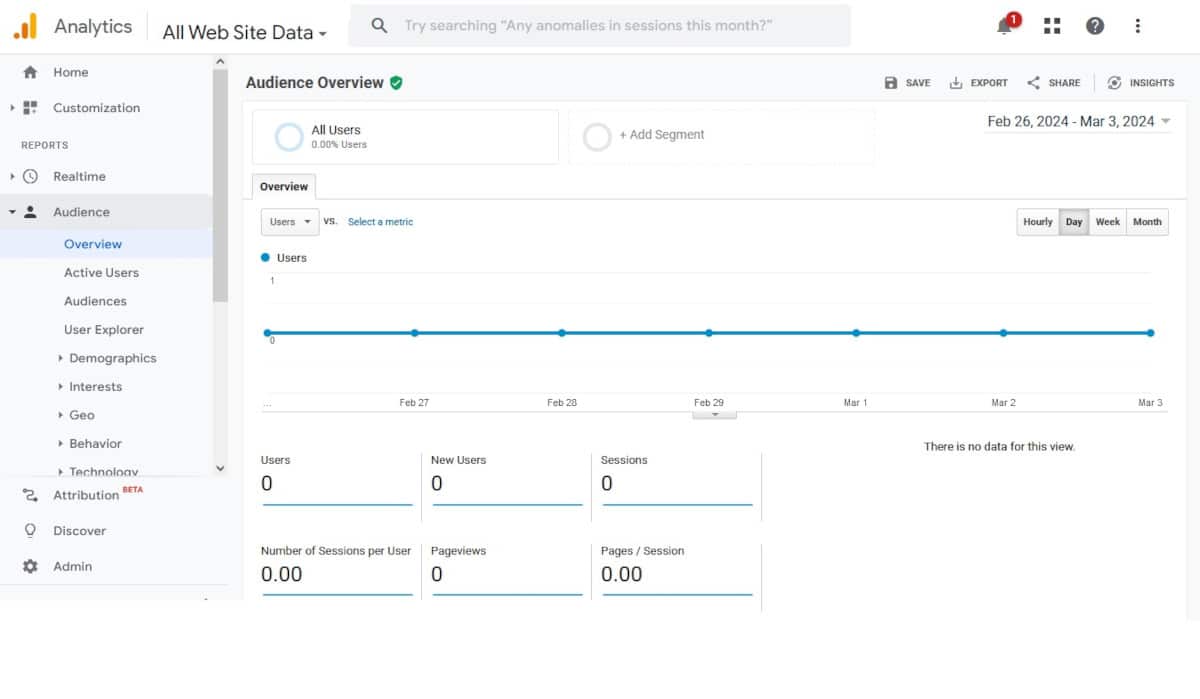
Various companies then started tracking digital information and its effect on websites and businesses in the late 1990s when Google began its Analytics service. This prompted businesses from all industries to keep up in increasing their respective website traffic through user visits, click rates, IP information, and a host of other analytics.
Yet “Big Data” only came into circulation after Roger Mougalas coined it in 2005. This was the same year the open-source data processing software of Hadoop merged with MapReduce. Hadoop is a technology used in processing and distributing Big Data. (More about this in the Big Data Technologies section of this post.)
Quite an interesting history! Now let’s move on to the types of Big Data.
3. What are the types of Big Data?
There are three types or classifications of Big Data. Based on its industry definition, one can identify Big Data as either:
-
unstructured,
-
semi-structured, and
-
structured.
This pertains more to the status of the data collected whether it is processed or not. Thus, unstructured Big Data is raw data. Semi-structured data pertains to Big Data that has undergone some processing. While structured Big Data is already processed and is in human digestible format.
Speaking of processing, there are different technologies used before Big Data attains a structured format. That’s what we’ll discuss next.
4. What technologies are used for Big Data?
Big Data technology are the computer programs or software used in handling the mass or volume of unstructured data from the internet. By handling, this pertains to the particular function a Big Data technology does.
Big Data technology helps businesses from being overwhelmed by the data collected and makes it easier to arrive at timely decisions for business growth.
a. What are the four components of Big Data technology?
Four components of Big Data technology correspond to their particular functions. These are data:
-
capture,
-
storage,
-
processing, and
-
visualization.
The first three main components of Big Data technology are very self-explanatory. The last component is software that transforms the processed mass of collected data into visual formats such as charts. It means this technology converts processed data into one that is more understandable by humans.
b. What are the top fields or areas of Big Data technology?
There are many areas of Big Data technology but the top main ones are:
-
Computer vision,
-
Machine learning,
-
Natural language processing (NLP), and
-
Predictive analytics.
Computer vision uses artificial intelligence to interpret or decipher digital images. An example of these is Heat Maps, which are used in web design. Machine Learning, on the other hand, deals more with recognizing an existing pattern in the data to harness insights and make predictions from it.
Natural Language Processing goes into the data’s text to harvest meaning and create insights from it. Finally, predictive analytics involves identifying patterns and trends in the data to create projections on future events.
I find predictive analytics more useful in web design in pinpointing trends in visitor behavior and customer preferences but also in web design itself. This would be most useful in providing product and content recommendations for website visitors based on data collected from a particular region or industry.
c. What are the types of Big Data technologies?
Several types of Big Data technologies are useful to organizations in effectively managing their data.
According to KnowledgeHut, these are mostly open-source applications under the umbrella of Apache besides Mongo DB and Elastic Search. These are Apache:
1. Hadoop
2. Hive
3. Flume
4. Cassandra
5. Spark
6. Kafka
I won’t go into the details of these technologies since information on them is widely available online. The important thing to know is what these technologies are used for.
Big Data batch processors are done with Apache Hadoop and Apache Spark. Big Data for streaming applications is good with Apache Storm and Apache Kafka.
On the other hand, KnowledgeHut recommends using Apache Cassandra and MongoDB for the scalability and consistency of Big Data.
Now we are done with the basics of Big Data. Let’s move on to the role of Big Data in Web Design.

The Role of Big Data in Web Design
Big Data has five basic roles in web design that make it important for any business. First, it optimizes the user experience for any website. Second, it allows user personalization and focus through the website. Third, it allows flexibility and responsiveness of the website.
All these three loads lead to maximizing website performance. This, in turn, helps reduce costs for website development and maintenance, marketing, and operations. Thus, Big Data in Web Design becomes a competitive leverage for businesses.
How does Big Data do this in Website Design? Let me discuss each role further.
1. Optimize User Experience
There are nine web design principles for better user engagement: powerful copywriting or storytelling, excellent visual hierarchy, optimized content, good navigation, great response speed, sufficient internal links, fast loading speed, clean layout, and customer-centric experience.
A customer-centered website design addresses the ever-changing needs of the business’s target market conveniently and creatively.
But to do this, a business must thoroughly know one’s target market including their behavior and ever-changing needs to identify solutions even before such needs are verbalized (something that rarely happens).
This is where Big Data comes in. Through the website, Big Data can:
- assess the different kinds of visitors who find interest in the company,
- identify what visitors are looking for,
- pinpoint how visitors discovered the company online,
- discover if visitors found what they were looking for,
- study how to make visitors stay on the website to engage with the company (e.g. make a purchase, sign up for newsletters or offers, follow through social media, etc.), and
- classify the visitors according to personas.
With this valuable data, a company owner can easily devise a marketing plan and website design that coincides with the personalities, interests, accessibility, preferences, and buying behavior of visitors.
Big Data will help designers efficiently tweak the website to meet customer needs. This might involve making the website more visually appealing, having smoother navigation, and easy-to-find information quickly in a hassle-free, short period.
As a result, this will optimize user experience for visitors of the website, who are either current or potential customers of the company.
2. User Personalization and Focus
Big Data can even provide real-time user engagement information to web designers to incorporate personalization in the website and company services.
In gist, web design based on Big Data help enhance website features, functions, and services that focus on the customer’s needs and geared to personalized experiences. This could mean improving the website’s design to make it more interactive according to customer expectations to increase customer retention and engagement.
Web designers then gain a vital role in the company’s operations since the same gathered data can be used to influence human behavior. By influence, this means providing visitors recommendations for suitable products and interesting company events to participate in, among others.
Moreover, web designers can help marketers plan better campaigns through the website based on predictive analysis that will have bigger investment returns for the company. The campaigns will be more targetted based on individual actions taken on the website and predictions on next movements.
Big Data in Web Design eases up the purchasing path because marketing campaigns will be tailor-fit to website visitors most likely to purchase from the company.

3. Website Responsiveness & Flexibility
Besides optimizing and personalizing the user experience, Big Data detects the number of visitors accessing a website through mobile and other valuable information about such visits.
It also helps identify the flexibility of the website to integrate to other platforms or applications that suit customer lifestyles.
Designers then can easily get the feedback they need to improve website design and functionality at a faster rate.
Pain points in the website could be easily identified to incorporate better features such as the flexibility of integrating better payment modes for online payments.
Plus, designers can figure out and fix bugs or faulty functions in website versions for desktop and mobile devices for better website performance. The result is a smarter website for the company.
4. Maximize Website Performance
Speaking of website performance, Big Data’s role in optimizing user experience and providing personalization features on the website overall leads to maximizing performance.
This improves website traffic, ensures functioning pages and links, enables smooth navigation, and generates higher clickthroughs.
Adding Heat Map analysis tools can provide real-time testing results on the most-visited pages of users, pinpoint areas for improvement, and devise website retention. Web designers can quickly improve design, situate CTAs more strategically, and achieve metrics better.
Web designers, in addition, can embed artificial intelligence tools in the website to develop creative assets based on Big Data for smoother operation. They can even set the website to auto-update content and features without making a single code.
More importantly, Big Data helps detect security breaches. This is the most important role of Big Data for it helps attacks from hackers, phishers, and fraud. Thus, Big Data protects the website from frequent downtime leading to better performance.
5. Reducing costs
Big Data reduces web development costs to a minimum. Investments for improvement in web design and features are made where it is needed. This means trial and error on which design and functionality work best is removed because the developer or designer acts on factual information.
In addition to reducing web development and maintenance costs, Big Data also aids in reducing operational costs. This pertains to lower costs for market testing and marketing campaigns.
It also lowers losses from fraud, security costs, and customer complaints for breaches and downtime. Big Data’s fraud detection techniques enable the website to match algorithms and detect anomalies and fraud characteristics.
This translates to lower security costs, losses from fraud, and damages from customer complaints due to breaches and runtime errors. The result is a maximum return on investment for web designers, marketers, and company owners across industries.
6. Competitive Leverage
Truly, Big Data can generate higher income for the company and leverage its market competitiveness. Data gathered from the website can also pinpoint what products consumers look for, what product improvements are needed, and what new products to invest in to meet untapped needs.
Big Data can also predict future trends in the industry by gathering data from across online transactions and sources on a company’s target market. This will enable the company to improve or develop products and services and release them ahead of the competition.
Through Big Data, companies can also predict inventory needs and only manufacture products based on projected consumer demand.
Thus, data and predictive analysis will help the company have a wider market scope, achieve marketing targets, and attain higher returns on investment.
Now that the role of Big Data in web design is clear. Let me give some precautions in using this technology.

Precautions In Using Big Data In Web Design
There are several precautions or challenges involved when using data-driven web design. Primarily, these are the accuracy of data quality, correctness of data analysis, and safety of data privacy.
Secondary challenges involve encountering analysis paralysis, creating balance in using quantitative over qualitative data, and maintaining the human aspect or element of design.
Using the right Big Data technology according to a business’s goals and hiring a credible data analyst will help you address the first two challenges. Plus, the commitment to collect and analyze data of high quality only.
Ensuring data privacy—using the information gathered to strictly improve products and services while keeping it safe from third parties—addresses the third challenge.
Addressing the secondary challenges would require having a system for implementing data-driven design. One that includes being equipped with a clear design process from identifying goals to testing designs that will be followed religiously in the company. Doing so would help the business achieve its goals and ensure happy customers.
Having said that, let’s now look at some companies that successfully used Big Data in web design.
Companies That Used Big Data In Web Design
Big Data is widely used in various business sectors such as banking, education, e-commerce, entertainment, healthcare, government, media, and telecommunications. The travel and tourism sector is also catching up in using Big Data.
Thus, companies like Walmart, Uber, Amazon, Airbnb, Netflix, and Flipkart are some of the high-end users of the technology because of its big financial returns.
1. Walmart
Walmart used Big Data to build innovative features for customers when the website was redesigned. This is why the company’s website has the best e-commerce check-out pages in the world.
The e-commerce giant used NoSQL and Hadoop to generate real-time data sourced across the globe to provide customers with a better shopping experience. The data also enabled the company to improve its logistics in the process.
2. Uber
Uber, on the other hand, uses Big Data to detect real-time pricing surges during traffic peak points and special occasions.
Their fare prices almost double when the destination has heavy traffic or demand for their service is high. Holidays, when it is difficult to get a cab, means demand is high and Uber can increase its price.
The company uses algorithms from machine learning to detect the rate of demand. This helps it assess when to adjust its prices for its members when needed. Doing so helps them avoid losing customers by pricing high for a long time.
Big Data then has made Uber one of the best web app websites for 2024.

3. Amazon
Retail giant Amazon highly depends on Big Data to improve its website features and to achieve a better user experience. The company was the first to use a recommendation system on the website based on the volume of data it collects from visitors every minute.
The recommendation system is partnered with a filtering technique that allows them to analyze visitors based on the company’s created customer personas (profiles of customers with similar behavior patterns, personalities, interests, and characteristics).
The result is a personalized recommendation system harvested from Amazon’s 12 million product base for visitors. Thus, visitors save time looking for products that they need. Amazon’s recommendation has repeatedly increased annual sales by 35% since it was first deployed.
Big Data is also used across Amazon’s business from pricing to supply chain development. It is also one of the most effective retargeting platforms of 2024.
4. Airbnb
Airbnb is one of the best travel agency websites of 2024. This young company started in 2016 and retained its success even during the COVID-19 pandemic. All thanks to Big Data!
This renowned rental platform stores 20 terabytes of data daily and stores 1.4 petabytes (1,400 terabytes) of it. The data is used for A/B testing and personalized recommendations.
The recommendation is based on image recognition of the most attractive property for customers. Through this technology, Airbnb provides customers with suitable accommodations quickly.
Since website visitors also rely on customer reviews, Airbnb increased the credibility of its rating system through Big Data. They used Natural Language Processing to assess true customer feelings from reviews written on the website.
They also use Big Data to aid visitors in getting the best pricing and accommodations through predictive modeling, regression analysis, and collaborative filtering. It is an awesome website!
5. Netflix
Top streaming movie provider Netflix uses Big Data similarly to Amazon and Airbnb. The company can know in real-time what customers are watching and their behavior while doing so.
By behavior, this pertains to where playback stopped, what titles are more interesting, ratings given per show, and other information.
The result is a recommendation system that keeps customers watching on their platform. That’s 209 million users with a 74% customer retention rate, of which 80% comply with recommendations.
The company uses Big Data analytics and technologies like Apache Spark, Hive, Hadoop, Kafka, Pig, and Storm.
6. Flipkart
Finally, there’s Flipkart. They used Big Data to address its website downtimes. This Bangalore-based e-commerce company often experiences downtimes due to the high volume of daily traffic on the website:
The company then used Big Data to predict surges in website traffic and avoid downtimes. They also used the technology to organize the website’s content and improve its performance.
I believe reading through these case studies has made the reality of Big Data’s importance to a business clearer to you. Let’s see what future awaits Big Data in web design.

The Future Of Big Data In Web Design
Experts foresee that the future of Big Data in web design will involve more personalization, immersive experiences, voice-activated applications, and secure systems.
Artificial Intelligence will extensively be used to create a more personalized experience for website visitors. Immersive experiences, on the other hand, are seen through the integration of audio reality and virtual reality in websites.
In terms of voice-activated applications, websites are forecasted to implement voice assistants and smart speakers. Web developers would also need to devise better website security systems as advanced cyber threats are foreseen to surface.
Big Data In Web Design & Your Business
Information is power—a nugget of truth that has more than quadrupled in today’s reality. With Big Data, businesses become more powerful in their respective fields. Thereby gaining better insight into their customers’ needs.
Insights that enable them to provide better solutions to address customer needs either through their company website, services, or products. Thus, big data is mandatory in web design because greater financial success and market standing are attained for the business.
Sources Used:
- Emeritus
- Simplilearn
- UXMatters
- TechnoBrains
- KnowledgeHut
- TweakYourBiz
- Data Flair Training
- UmassGlobal
- Medium
- Intellipaat
- Smart Data Collective
- Big Data Analytics News
- Smart Data Collective
FAQs
1. What is Big Data?
Bata Data is an accumulation of information produced by individuals—persons, companies, and organizations—from the various activities and transactions conducted through the Internet.
2. When did Big Data begin?
Big Data was first named as such by O’Reilly Media Market Research Director Roger Magoulas. Magoulas was renowned for his expertise in data warehousing. However, experts say Big Data began almost a century earlier because of World War II. Alan Turing invented a machine that unraveled Nazi codes in 1943. Some claim Big Data began between the late 1990s and early 2000s similar to data processing.
3. What are the uses of Big Data?
Big Data has many uses. For Web Design, Big Data optimizes user experiences and enables customer personalization on website functions. It also achieves website responsiveness and flexibility. Thereby, maximizing website performance. Business-wise, Big Data is useful for reducing costs, leveraging competitiveness, attaining targets, and increasing returns on investment.
3. Is it true that Big Data is dangerous?
No. Big Data is not dangerous in itself. Big Data usage and handling by certain individuals can make it dangerous. Individuals like hackers, scammers, and identity thefts should be kept from accessing Big Data. Thus, companies using Big Data should always protect data privacy and security. This is done through implementing tight security measures in websites and software applications using Big Data.
4. Does Big Data protect companies from competition?
No. Competition is not bad in itself. Companies need the competition to provide better products and services for consumers. Companies need Big Data to leverage their competitiveness by addressing consumer needs—present and future.